
Introduction
The language we use when communicating with young people plays a powerful role in shaping their confidence, emotional wellbeing, and behaviour. In residential care settings, where many young people have experienced trauma, positive communication is essential.
By making small, intentional shifts in our language, we can move from control and criticism to support, collaboration, and empowerment.
Why Language Matters in Youth Care
Young people are highly influenced by the words and tone used by the adults around them. Negative or dismissive language can:
- Increase feelings of shame or anxiety
- Damage trust and relationships
- Reinforce negative self-beliefs
In contrast, constructive language helps to:
- Build resilience
- Encourage emotional regulation
- Strengthen relationships
- Promote independence and decision-making
Reframing Language: Simple Changes, Big Impact
Below are practical ways to reframe everyday communication with young people in your care.
1. Move Away from Threats and Consequences
Instead of focusing on punishment, encourage reflection and learning.
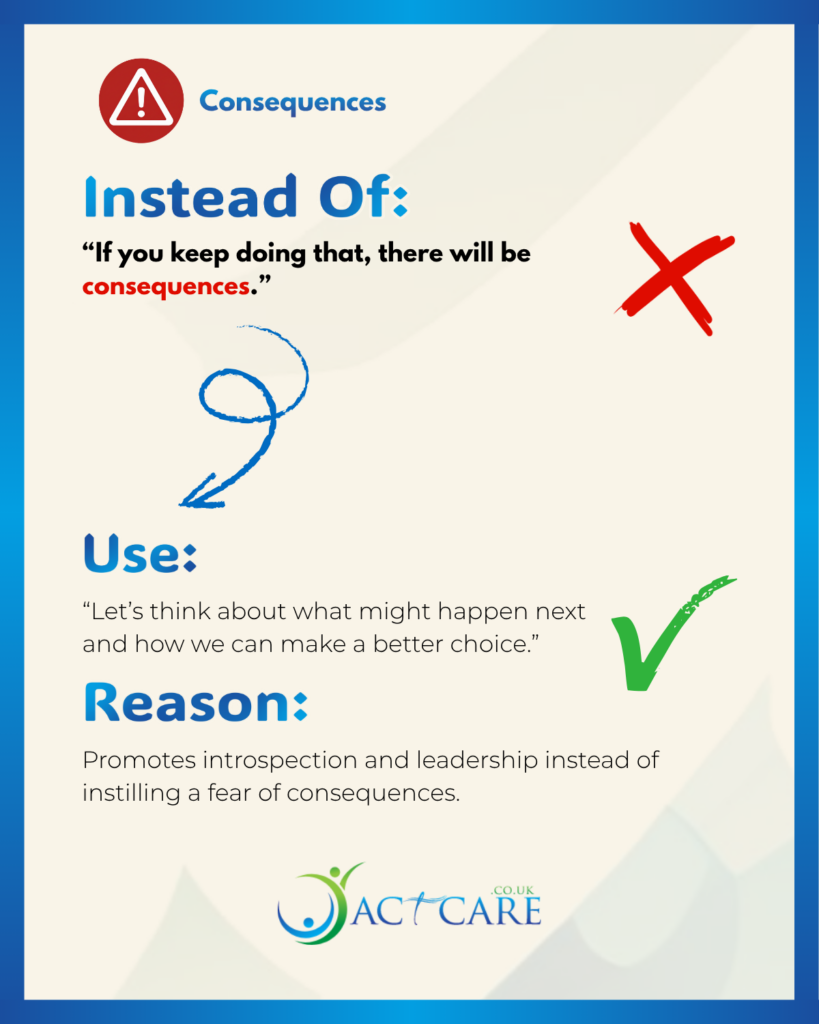
Avoid: “If you keep doing that, there will be consequences.”
✅ Try: “Let’s think about what might happen next and how we can make a better choice.”
Why it works:
This approach promotes responsibility and helps young people develop critical thinking skills.
2. Separate Behaviour from Identity
Labelling young people can harm their self-esteem.
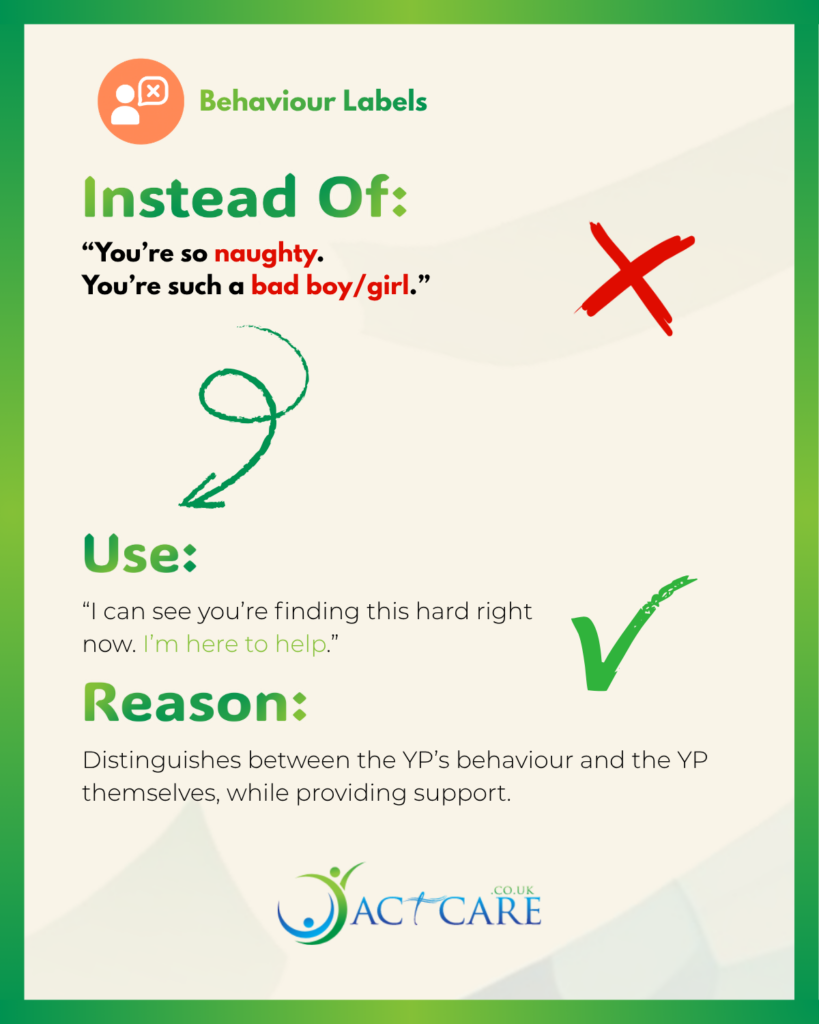
Avoid: “You’re naughty” or “You’re a bad child.”
✅ Try: “I can see you’re finding this hard right now. I’m here to help.”
Why it works:
It recognises the behaviour without defining the young person, encouraging growth and self-awareness.
3. Replace Commands with Collaboration
Authoritative language can create resistance and disengagement.
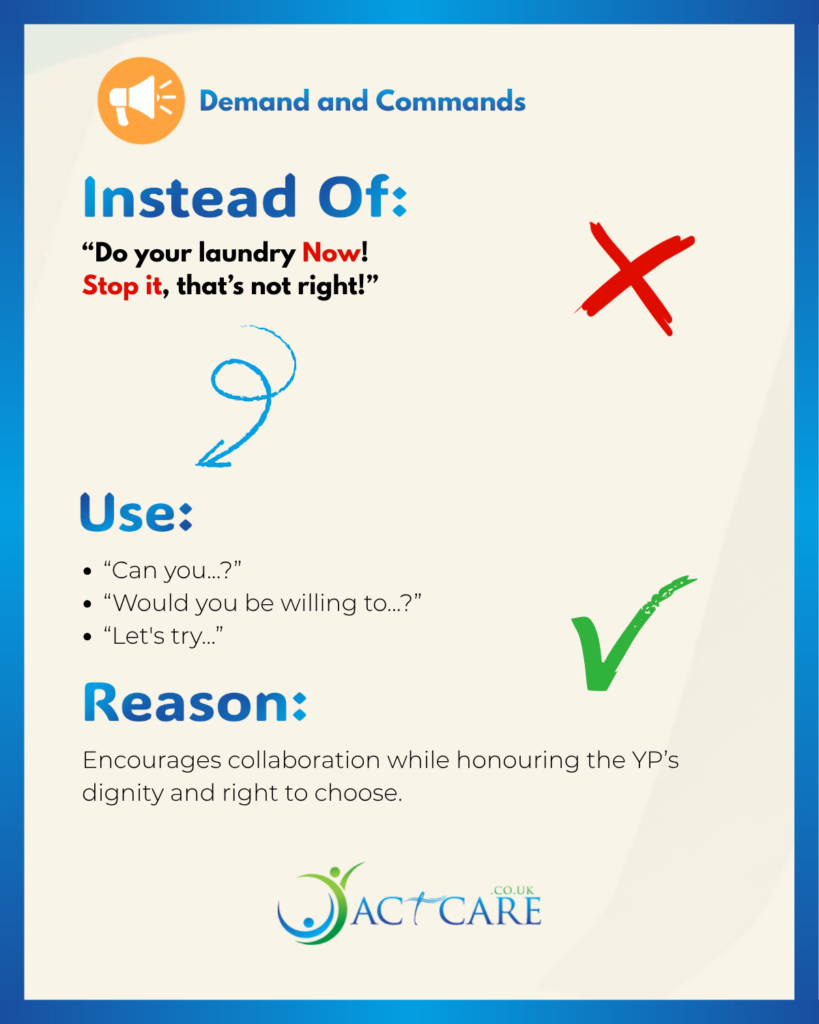
Avoid: “Do it now” or “Stop that.”
✅ Try:
- “Can you…?”
- “Would you be willing to…?”
- “Let’s try…”
Why it works:
It respects the young person’s autonomy and encourages cooperation rather than compliance.
4. Validate Emotions Instead of Dismissing Them
Young people need to feel heard and understood.
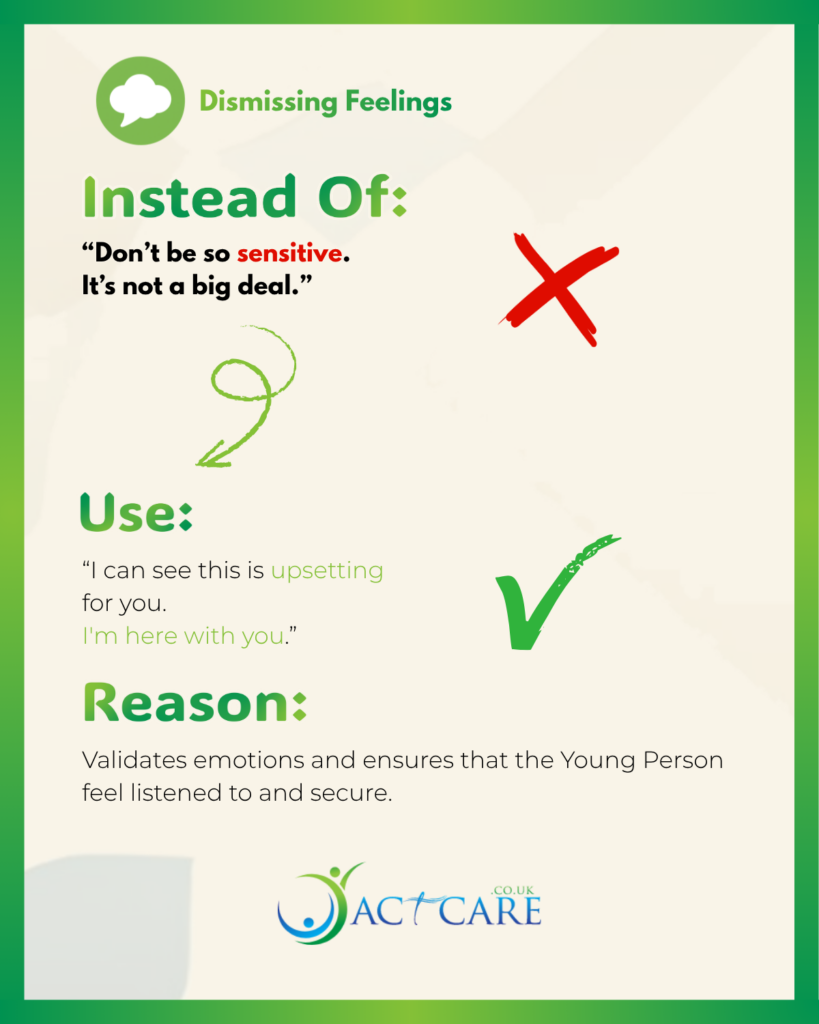
Avoid: “Don’t be so sensitive” or “It’s not a big deal.”
✅ Try: “I can see this is upsetting for you. I’m here with you.”
Why it works:
Validation builds emotional safety and helps young people regulate their feelings.
5. Focus on Problem-Solving, Not Blame
Blame can lead to shame and defensiveness.
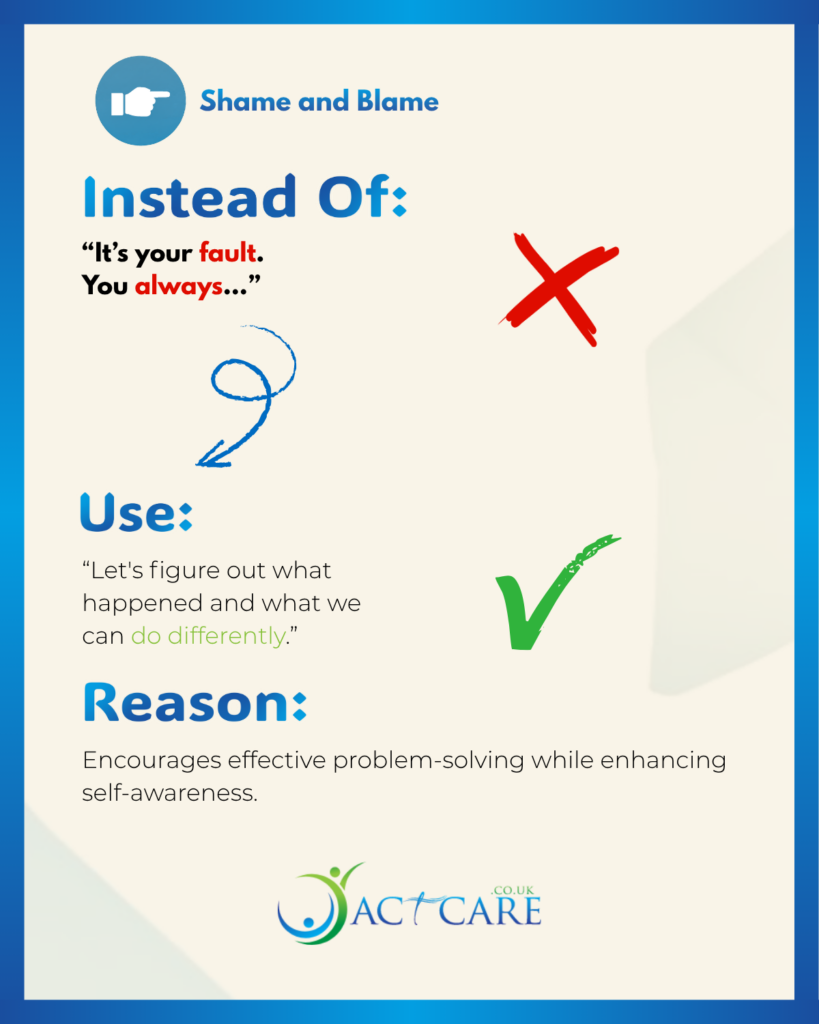
Avoid: “It’s your fault” or “You always do this.”
✅ Try: “Let’s figure out what happened and what we can do differently.”
Why it works:
It promotes learning, accountability, and future-focused thinking.
The Benefits of Positive Communication
Using supportive, trauma-informed language leads to:
- Stronger relationships between staff and young people
- Improved behaviour and decision-making
- Increased emotional resilience
- A more positive care environment
These outcomes are essential for helping young people thrive both in care and beyond.
Conclusion
The words we choose matter more than we realise. By reframing our language, we can create a safe, supportive environment where young people feel respected, understood, and empowered.
Small changes in communication can have a lasting impact on a young person’s life.
📞 Get in Touch
We welcome referrals and enquiries from commissioning teams, social workers, and local authorities.
📞 07401 131547 📧 referrals@actcare.co.uk 📧 info@actcare.co.uk 🌐 actcare.co.uk
Follow us on our other social media profiles! Instagram | Facebook | X (formerly Twitter)